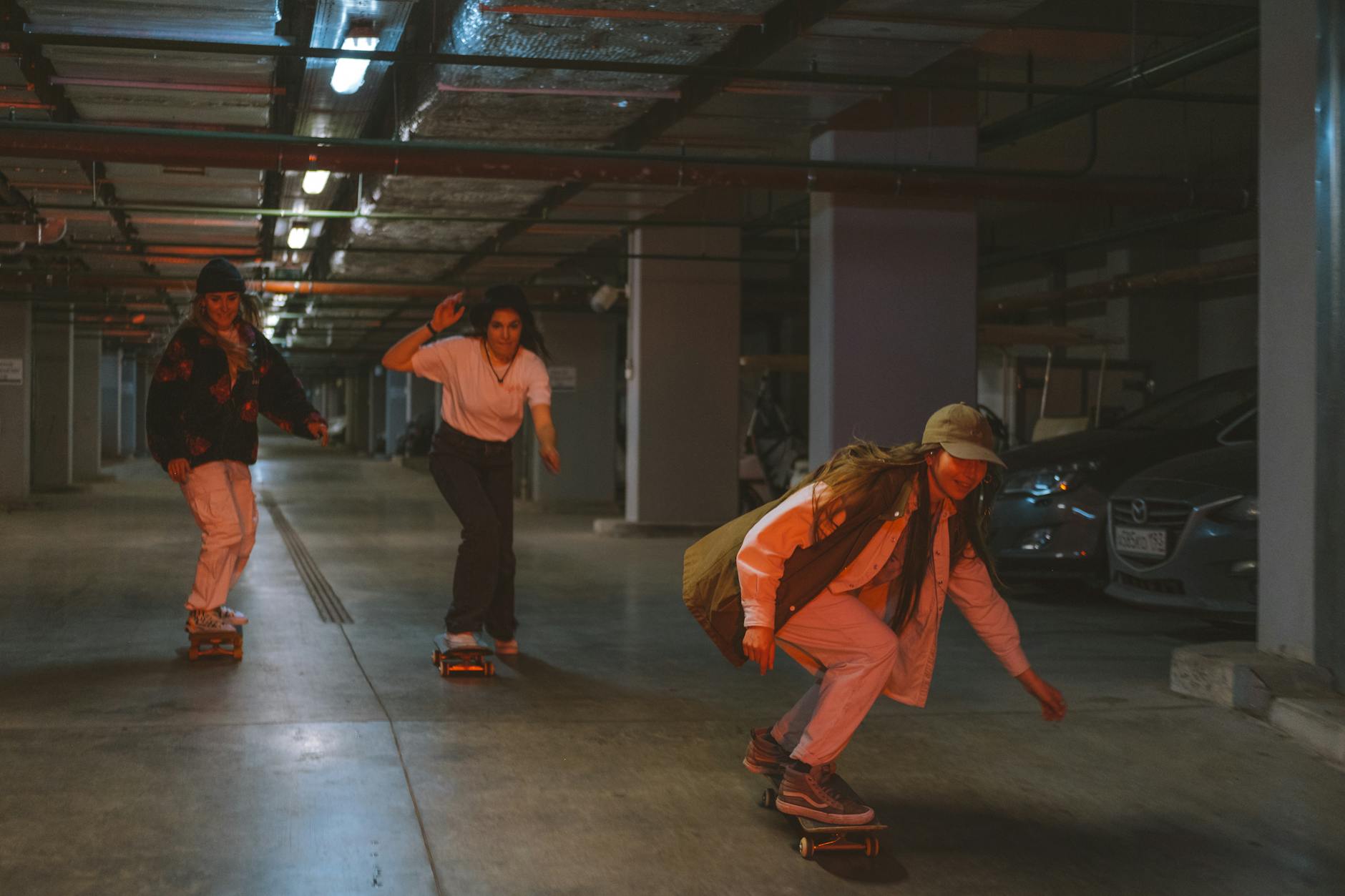
How to Stop on a Skateboard: Three Methods for Beginners
The first time I rolled down a gentle slope in Victoria Park, East London, I had absolutely no idea how to stop. I’d borrowed a mate’s board, slapped one foot on it with misplaced confidence, and promptly coasted straight into a rubbish bin. It wasn’t graceful. A couple of pigeons scattered. An elderly man with a terrier gave me the sort of look that could curdle milk. But that moment, humiliating as it was, taught me the single most important lesson any new skater can learn: before you worry about tricks, before you worry about speed, you need to know how to stop.
It sounds obvious, doesn’t it? And yet almost every beginner — at skateparks from Glasgow to Bristol, from the South Bank undercroft in London to the Wheels skatepark in Newquay — focuses entirely on getting moving and gives almost no thought to bringing things to a halt. The result is a lot of scraped palms, torn jeans, and bruised egos. This guide is here to change that. Whether you’re just starting out on a complete beginner setup from a shop like Route One or Slam City Skates, or you’ve just dug out an old deck from the garage, these three stopping methods are your foundation. Master them, and the rest of skating becomes dramatically less terrifying.
Why Stopping Is the Most Underrated Skill in Skating
We live in a country with a lot of pavements, a fair amount of hills, and a great many people who would rather not be knocked over by a teenager on a skateboard. Stopping isn’t just a safety skill — it’s a matter of courtesy and awareness. The Highway Code doesn’t technically cover skateboarding on public roads in the UK (it’s actually prohibited under the Road Traffic Act 1988 on public roads, though enforcement is rare and largely discretionary), but councils and local authorities do have powers to restrict skating in certain areas. Knowing how to stop confidently means you’re in control of where you go and, crucially, where you don’t go.
There’s also the simple confidence factor. When you know you can stop, you skate better. You stand taller on the board, you commit to movements, and you stop tensing up every time you pick up a little speed. That tension — that stiff, rigid posture that every frightened beginner adopts — is actually what causes most falls. Relax, know your stopping options, and the board becomes a much friendlier thing to stand on.
Method One: Foot Braking
This is where everyone starts, and for good reason. Foot braking is the most intuitive stopping method on a skateboard, and it works at virtually any speed you’re likely to reach as a beginner. The basic idea is simple: you drag the sole of your back foot along the ground to create friction and slow yourself down.
Here’s the thing that catches people out, though. The instinct is to just drop your back foot flat onto the ground suddenly, which tends to send your front foot — and the rest of you — lurching forward. The technique requires a bit more control than that.
- Start in your natural stance. Whether you’re regular (left foot forward) or goofy (right foot forward), make sure you’re comfortable and balanced with your front foot roughly over the front bolts of the deck.
- Shift your weight slightly forward. Before you bring your back foot down, press a little more weight through your front foot. This keeps the board stable as your back foot leaves it.
- Lower your back foot slowly to the ground. Don’t slam it down. Let the sole of your shoe kiss the surface gently, then gradually increase the pressure. Think of it less like stomping on a brake and more like pressing a pedal smoothly.
- Keep your front knee bent. This is your shock absorber. A straight front leg is a recipe for wobbling. Bend into it and stay low.
- Apply increasing pressure until you stop. The friction from your shoe sole does the work. Keep the pressure consistent and even.
One practical note: foot braking chews through shoes at a remarkable rate. If you’re skating regularly on UK tarmac — which tends to be particularly coarse and unforgiving compared to some smoother continental surfaces — you’ll notice the sole of your back shoe wearing away within weeks. Skate shoes from brands like Vans, DC, or éS are designed with reinforced soles partly for this reason. Avoid doing this in your good trainers. Your mum will not be pleased, and she will be right.
Foot braking is genuinely the method you’ll use most often for the first several months of skating. It’s reliable, predictable, and works on flat ground and gentle slopes. Practice it at very low speeds first — push off just once, coast gently, and practise stopping before you’ve built up much momentum. A quiet car park on a Sunday morning is ideal for this. Halfpipes and busy paths are not.
Method Two: The Heel Drag
The heel drag is a slight variation on foot braking and is particularly useful when you’re moving at a moderate pace and want a smoother, more gradual stop. Instead of dragging the whole sole of your foot, you pivot your back foot so that the heel hangs off the tail of the board and makes contact with the ground while the toe stays on the deck.
This sounds fiddly, and it does take a little more coordination than straightforward foot braking. But once it clicks, it feels very natural and gives you a bit more control over the rate at which you decelerate. The contact point — the heel — is further back than your shoe sole would be in a standard foot brake, which means the leverage is slightly different and some people find it easier to modulate the pressure.
To practise this, it helps to be on completely flat ground with very little speed at first. Put your back foot near the tail of the board, then slowly rotate it outward so the heel drops toward the ground. The tail of the board acts almost like a fulcrum. Let the heel make light contact, feel the resistance, and gradually lean into it. You might find it takes five or six attempts before it feels anything other than deeply awkward. That’s normal. Stick with it.
The heel drag is less useful on steep hills and at high speeds, where foot braking gives you more surface contact and therefore more stopping power. Think of it as a tool for moderate speeds and situations where you want a smoother, more gradual stop — say, when you’re approaching the end of a path in a park and you don’t want to brake abruptly in front of other people.
Method Three: The Tail Scrape (Also Called the Tail Stop)
This one feels more like proper skateboarding, and it’s immensely satisfying once you can do it reliably. The tail scrape involves pressing down on the tail of your board so that it drags along the ground, creating friction and bringing you to a stop. It’s the same movement that forms the beginning of an ollie, which means learning it now pays dividends later.
The technique goes like this: as you’re rolling, shift your weight back so that your back foot presses down on the tail. The nose of the board lifts slightly, and the tail makes contact with the ground. The grinding of the tail against the surface slows you down. Done well, it’s quick, controlled, and looks reasonably cool. Done badly, you sit down on the pavement involuntarily.
- Make sure your back foot is positioned over or just behind the tail bolts before you initiate the stop.
- Press down gradually rather than popping the tail suddenly — a sudden pop at speed will kick the board out and leave you stationary in the air for a fraction of a second before gravity reminds you of the situation.
- Keep your front knee deeply bent as the nose rises. The lower you are, the more stable you’ll be.
- Let the tail grind for a moment rather than trying to stop instantly. Control the deceleration.
- Once you’re nearly stationary, step off casually. Don’t try to land any heroics at this stage.
The tail scrape does wear down the tail of your deck over time. This is unavoidable, and it’s one of the reasons skate decks need replacing periodically. In the UK, a decent mid-range complete skateboard — something you might pick up from Decathlon, or a proper skate shop like Ideal in Bristol or Welcome Skate Store in Nottingham — will typically run you between £60 and £120. The tail wearing down is not a reason to avoid this method; it’s just the natural lifecycle of a board.
It’s worth mentioning that the tail scrape is less effective at very high speeds and is not a substitute for foot braking in urgent situations. Use it for moderate speeds, for showing off just a little bit in front of your mates, and as a step on the path toward learning more technical tricks.
Common Mistakes and How to Avoid Them
Having watched dozens of beginners at parks like House of Vans in London and at community sessions run by organisations like Pushing Boarders, there are a handful of errors that crop up again and again. Not because people are careless, but because skateboarding asks your body to do things that feel deeply counterintuitive at first.
The most common mistake is looking down at your feet. When you’re nervous and trying to execute a stopping technique, the instinct is to watch what your feet are doing. Unfortunately, this shifts your weight forward, puts your balance in entirely the wrong place, and usually ends with you stumbling off the front of the board. Fix your gaze at a point about three or four metres ahead of you on the ground. Let your feet feel what they’re doing rather than trying to supervise them visually. It takes trust, but it’s the right approach.
The second mistake is locking your knees. Rigid legs transfer every small bump and irregularity in the surface straight up to your centre of gravity, and you’ll wobble yourself
off the board before you’ve had a chance to react. Keep a slight bend in your knees at all times — think of them as shock absorbers rather than structural supports. This bend also lowers your centre of gravity, which makes you considerably more stable and gives you far more control when you’re preparing to stop.
The third mistake is braking too abruptly. All three methods described above reward gradual, controlled application. Slamming your foot down hard, dragging with excessive force, or throwing your weight into a turn too quickly will send you pitching forward or sliding out sideways. The goal is to bleed off speed progressively. If you find yourself needing to stop in a genuine hurry, a gentle jump off the back of the board onto both feet is far safer than forcing any braking method beyond its limits.
One final point worth making: practise stopping before you feel like you need to. Many beginners spend their first sessions purely trying to balance and push, and then suddenly find themselves rolling toward a kerb with no reliable way to slow down. Go to a quiet, flat piece of ground, get moving at a modest pace, and run through each method deliberately. Repetition builds the muscle memory that makes stopping feel instinctive rather than panicked.
Learning to stop well is, in many ways, more important than learning to go. Speed is easy to generate on a skateboard; controlling and shedding it is the real skill. Work through foot braking, heel dragging, and the kick turn stop at your own pace, iron out the common errors, and you will find that the whole experience of skating becomes calmer and more enjoyable almost immediately. Confidence on a board comes not from going faster, but from knowing with certainty that you can stop whenever you choose.