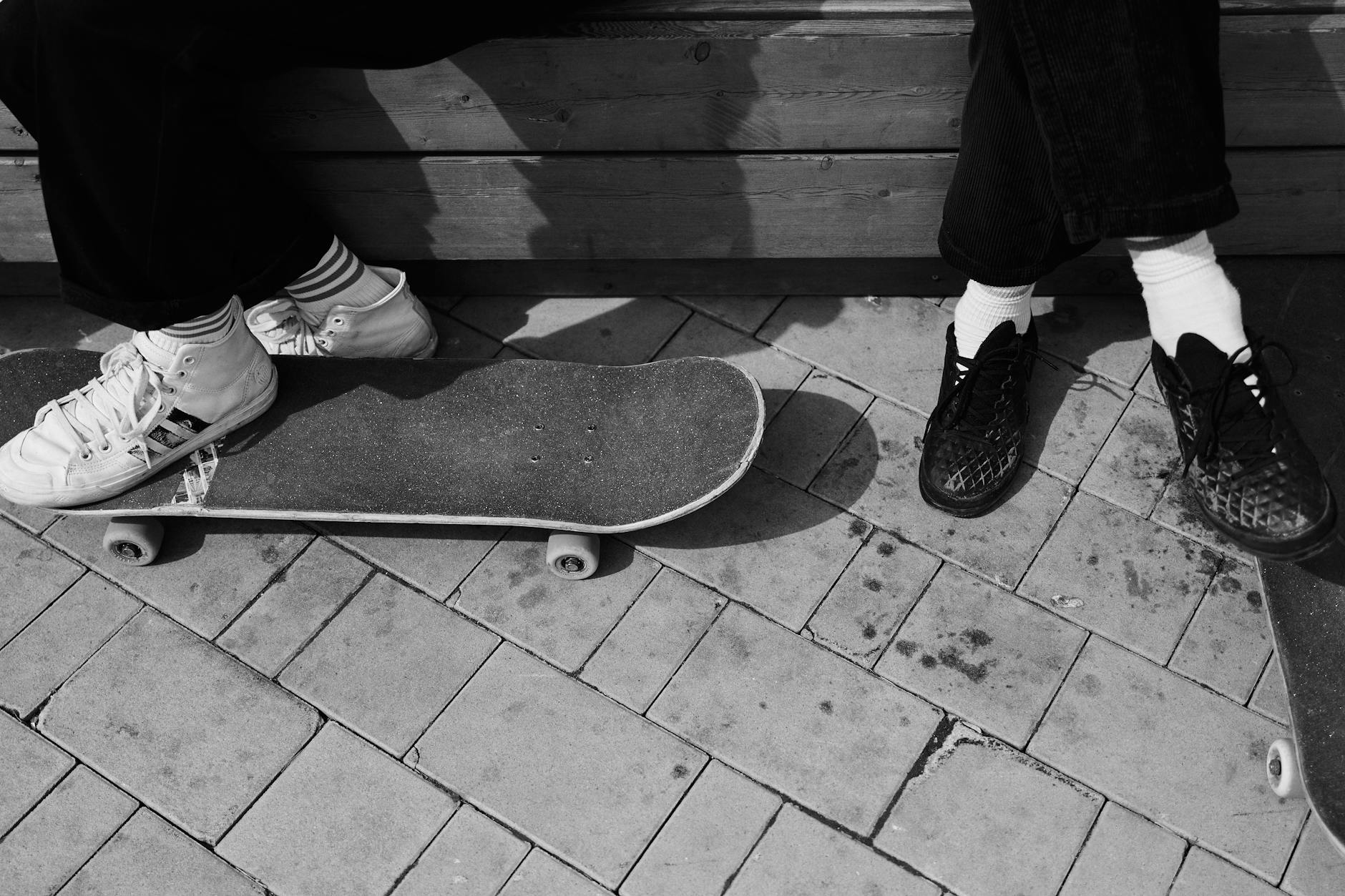
How to Ollie: The Most Important Skateboard Trick for Beginners
The ollie is the foundation of almost everything in skateboarding. Without it, you cannot grind a kerb, clear a set of stairs, or string together a line of tricks at your local skatepark. It is the single most important skill a beginner skateboarder can learn, and once it clicks, the entire world of skateboarding opens up in front of you. This guide will walk you through exactly how to perform an ollie, from the correct foot placement to the timing of each movement, with practical advice tailored for anyone starting out in the UK.
Whether you are practising on a quiet estate in Manchester, a smooth car park in Bristol, or heading to one of the many excellent skateparks across England, Scotland, Wales, or Northern Ireland, the mechanics of the ollie are exactly the same. What changes is your environment, your equipment, and how much time you put in. This guide covers all of it.
What Is an Ollie and Why Does It Matter?
An ollie is a jump performed on a skateboard in which both the board and the rider leave the ground together, without the rider using their hands. It was invented by Alan “Ollie” Gelfand in the late 1970s and later adapted for street skating by Rodney Mullen in the early 1980s. Since then, it has become the single most practised move in skateboarding history.
The reason it matters so much is purely structural. Virtually every trick in street skating and park skating is built on top of the ollie. A kickflip is an ollie with a flick. A heelflip is an ollie with a different flick. A 50-50 grind requires you to ollie onto an obstacle first. Even tricks that look completely different at first glance rely on the same body mechanics and timing that you develop by learning the ollie. Skipping it and trying to learn more visually impressive tricks first is a common mistake that leads to bad habits and slow progress.
Getting Your Equipment Right
Before you even attempt an ollie, it is worth making sure your setup is appropriate. Beginners in the UK often make the mistake of buying the cheapest possible complete skateboard from a sports superstore and then wondering why learning feels so difficult. Low-quality boards with hard plastic wheels, stiff trucks, and warped decks make every aspect of learning harder than it needs to be.
You do not need to spend a fortune, but you do need a decent setup. Here is what to look for:
- Deck: A standard width of between 8.0 and 8.5 inches suits most beginners. Brands such as Enjoi, Santa Cruz, and Element are widely available in the UK through shops like Route One, Slam City Skates in London, and Rollersnakes online. Avoid toy department boards.
- Trucks: Independent and Thunder are reliable choices. Make sure the truck width roughly matches your deck width. Slightly loose trucks help with balance during the learning phase.
- Wheels: For street and skatepark use, wheels between 52mm and 56mm with a hardness rating (durometer) of around 99a to 101a are ideal. Softer wheels (78a-87a) are for cruising, not tricks.
- Bearings: Bones Reds are the go-to budget option and are stocked by almost every UK skate shop. They keep your wheels spinning smoothly without costing a lot.
- Grip tape: This comes pre-applied on most complete setups. If you are buying parts separately, Mob Grip and Jessup are both excellent and widely available.
- Helmet and pads: Legally required for under-18s at many managed UK skateparks. Even if you are an adult, a helmet and wrist guards are strongly recommended while learning.
If your budget is tight, check local Facebook Marketplace listings or dedicated UK secondhand skate groups. A used setup from a reputable brand will almost always outperform a new toy-store board.
Finding the Right Place to Practise
The UK has a surprisingly strong skatepark infrastructure. The legendary Bay Sixty6 in London’s Ladbroke Grove, House of Vans in Waterloo, and Adrenaline Alley in Corby are well-known destinations, but there are hundreds of free outdoor skateparks across the country. Websites like Skatepark Map (skatepark.org.uk) allow you to search by postcode to find your nearest option.
When you are first learning the ollie, a smooth, flat surface is ideal. Rough tarmac and cracked concrete make balancing and landing far more difficult. Many UK skateparks have a dedicated flatground area or a mellow beginner zone away from the bowls and rails. Use these. Do not try to learn in areas where more experienced skaters are moving quickly – not only is it intimidating, it is a safety issue for everyone involved.
Smooth tarmac in quiet car parks outside retail parks, basketball courts, and freshly paved pedestrian areas are all good options for practising during off-peak hours. Be aware of local bylaws – some UK town centres have skateboarding restrictions in place, and enforcement varies significantly by council. Always be respectful of other pedestrians and be prepared to move on politely if asked.
Foot Placement: Getting the Basics Right
Correct foot placement is where everything begins. Spend time on this before you worry about the actual jump. If your feet are wrong, no amount of effort will produce a clean ollie.
First, determine your stance. If you naturally put your left foot forward, you are regular stance. If your right foot leads, you are goofy stance. There is no correct answer – it is purely personal. A simple test is to stand normally and have a friend give you a gentle push from behind. Whichever foot you instinctively put out to stop yourself falling is likely your back foot, meaning the other is your front foot.
Once you know your stance, position your feet as follows:
- Back foot: Place it on the tail of the board so that the ball of your foot (the widest part, just behind your toes) sits on the very tip of the tail. The foot should be roughly perpendicular to the board, or angled slightly. This foot does the initial popping motion.
- Front foot: Place it across the board at roughly the middle to slightly behind the front bolts, angled at around 45 degrees. This foot does the sliding motion that levels the board out in the air.
Stand on the board in this position with it stationary before anything else. Get comfortable. Rock back and forth slightly. The board should feel stable and balanced under you. If it feels wildly uncomfortable, adjust slightly – there is a small amount of personal variation in what works best for individual body types and shoe sizes.
The Mechanics of the Ollie: Step by Step
The ollie breaks down into three distinct movements that happen in very rapid succession. Understanding them separately before putting them together is the most effective way to learn.
- The pop: Bend your knees and press your back foot down sharply onto the tail of the board. The tail should strike the ground with a clean, snappy sound. This is called “popping” the tail, and it is what launches the board upward. The motion should come from a sharp downward snap, not a slow push. Think of it like stomping, but controlled and precise.
- The jump: Almost simultaneously with the pop, jump upward with your entire body. Your knees should come up toward your chest. This is where many beginners go wrong – they pop the tail but barely leave the ground. You must commit to the jump. The board follows your body upward because of the pop, but you need to give it room by getting your feet off it.
- The slide: As the board rises, drag your front foot up the deck in a sliding motion toward the nose. The outside edge of your front foot (your ankle/shoe side) brushes along the grip tape as it moves forward and upward. This motion does two things: it levels the board out horizontally in the air, and it guides the nose upward to match the height of the tail. Without this slide, the board will simply fly out from under you at an angle.
- The catch and land: At the peak of the trick, your feet should both be over the bolts – front foot near the front bolts, back foot near the rear bolts. This is the safest and most stable position for landing. Bend your knees as you come down to absorb the impact, and try to land with your weight centred over the board. Roll away.
Written out like this, it sounds sequential. In reality, the pop, jump, and slide all happen within a fraction of a second. The timing comes with repetition. Do not expect to land a clean ollie on your first session, or your fifth. Most people spend weeks practising before it becomes consistent.
Common Mistakes and How to Fix Them
Almost every beginner makes the same set of errors when learning the ollie. Identifying them early saves a great deal of frustration.
- Not committing to the jump: This is the most common issue. The board pops but the skater barely leaves the ground. The fix is deliberate – make yourself jump higher, even if it feels ridiculous. Exaggerating the jump during practice helps build the habit.
- Popping too slowly: A slow, heavy push on the tail produces a dull thud rather than a snappy pop. The tail needs to strike the ground quickly. Think “snap,” not “push.”
- Front foot not sliding: Without the slide, the nose stays low and the board flips away or stays lopsided. Practise the sliding motion while stationary. You can even do this off the board – mime the motion of dragging your front foot up and forward.
- Landing with feet too close together: Landing with both feet in the centre of the board (rather than over the bolts) puts enormous stress on the deck and
increases the risk of snapping it. Aim to land with your front foot over the front bolts and your back foot over the back bolts. This spreads the impact evenly and gives you much greater board control on landing. - Ollying on the move too soon: Many beginners try rolling ollies before their stationary ollie is consistent. Get comfortable popping the board cleanly while still, then gradually introduce movement. There is no shortcut here — repetition is the only way through.
Another common stumbling block is timing. The pop, the slide, and the jump all need to happen in rapid succession, but beginners often either rush the sequence or pause awkwardly between movements. A useful drill is to break it into counts: pop on one, slide on two, level on three. Once that rhythm becomes second nature, the counts disappear and the motion flows as a single fluid movement. Filming yourself is genuinely useful at this stage — what you think your body is doing and what it is actually doing are often quite different things.
It is also worth being patient with your own progress. Some skaters land a clean ollie within a few sessions; others take weeks or even months. Neither is cause for concern. The ollie involves a precise coordination of movements that simply takes time to internalise, and every skater’s body learns at its own pace. Skating on different surfaces, in different footwear, or when tired will all affect how the trick feels, so try to practise under consistent conditions where possible.
Final Thoughts
The ollie is the foundation on which almost every other skateboard trick is built. Once you have it, the rest of skating opens up — kickflips, heelflips, grinds, and gaps all trace their roots back to this one movement. It will feel awkward, then mechanical, then one day suddenly natural. Stick with it, skate with others when you can, and do not be discouraged by slow progress. Every skater you admire spent time in exactly the same place you are now, repeatedly popping their tail on a quiet patch of tarmac, trying to figure it out. Keep at it.
https://pesnimp3.net/2.html
https://shorturl.fm/sOfq5
https://shorturl.fm/4hP1A
https://shorturl.fm/aoBq7
https://shorturl.fm/WIy0i
https://shorturl.fm/IxqhE
https://shorturl.fm/OE9so
https://shorturl.fm/mX5hG
Последние новинки музыки 2026 скачать бесплатно https://shorturl.fm/cCQW9
https://shorturl.fm/LvAUK
https://shorturl.fm/tsdni
https://shorturl.fm/ckGmv
https://shorturl.fm/HLVOi
https://shorturl.fm/xDeR2
https://shorturl.fm/DIUmO
https://shorturl.fm/hJDP1
https://shorturl.fm/Vg4UU
https://shorturl.fm/2KzO3
https://shorturl.fm/Zt7x3
https://shorturl.fm/LOoBW
https://shorturl.fm/A2bfm
https://shorturl.fm/VaCGv
https://shorturl.fm/yokNQ
https://shorturl.fm/1sK38
https://shorturl.fm/hT1YV
https://shorturl.fm/bs6EC
https://shorturl.fm/VNbVc
https://shorturl.fm/ht52R
https://shorturl.fm/p866c
https://shorturl.fm/o6uZe
https://shorturl.fm/IWylE
https://shorturl.fm/olR4v
https://shorturl.fm/BSfAQ
https://shorturl.fm/1a60T
https://shorturl.fm/Aomik
https://shorturl.fm/Wy4jC
https://shorturl.fm/TH0tF
https://addlinks.pro/o9ybE
https://addlinks.pro/zKZDU