Skateboarding and Mental Health: Why It Helps
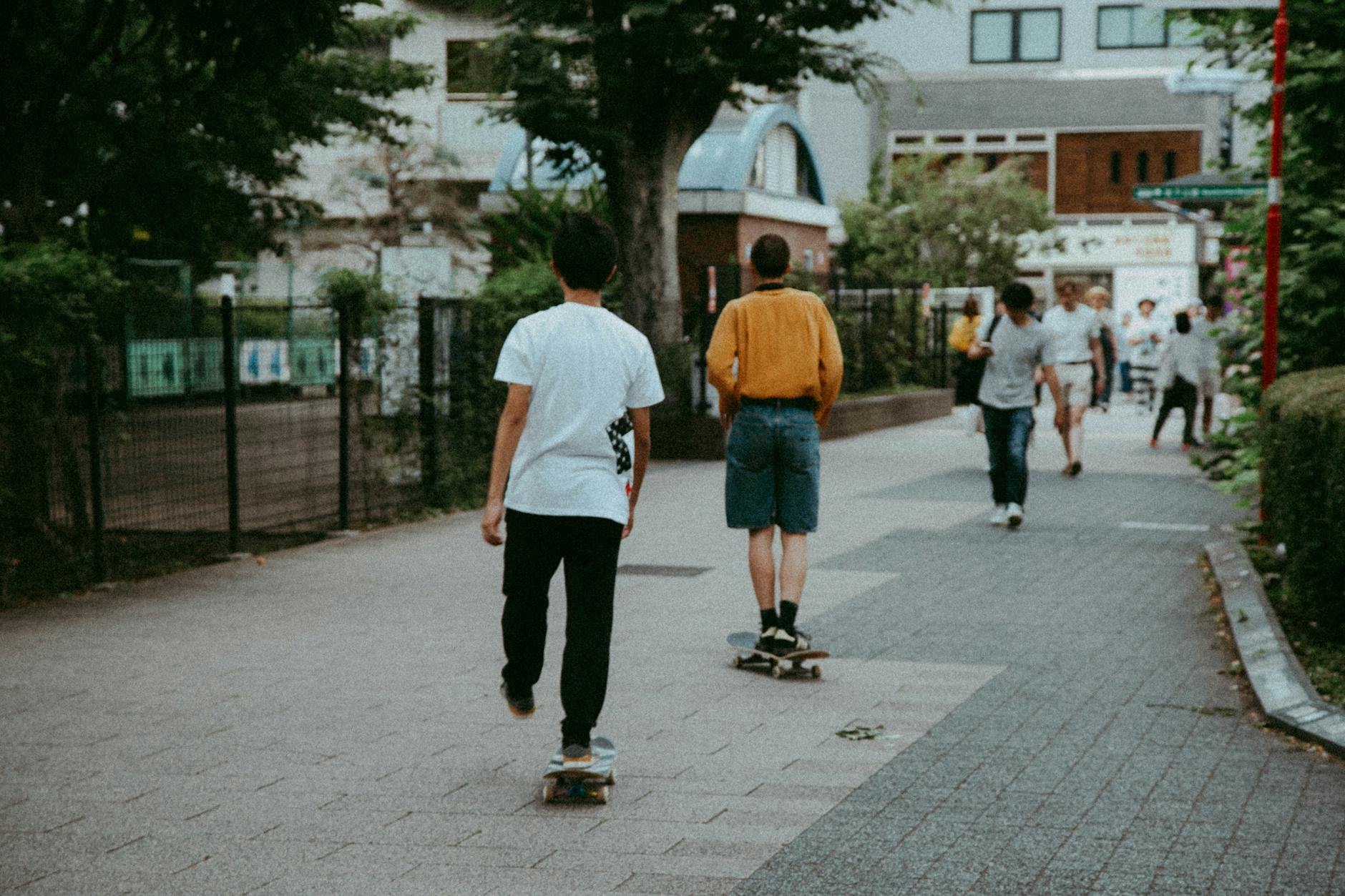
Skateboarding and inline skating have long carried a reputation for being the domain of rebellious teenagers in hoodies, grinding kerbs outside shopping centres and getting moved on by security guards. That image, while not entirely inaccurate, misses something far more important about what these sports actually do for the people who practise them. Across the UK, from the South Bank in London to the skateparks of Manchester, Glasgow, and Bristol, riders of all ages are quietly discovering something that researchers are only now beginning to document properly: skating is genuinely good for your mental health.
This is not a loose claim or a marketing angle. The physical, psychological, and social dimensions of skateboarding and inline skating combine in ways that are difficult to replicate in a gym or on a running track. If you are a beginner wondering whether to give it a go, understanding the mental health benefits is a solid reason to lace up and push off for the first time.
The Science Behind Movement and Mood
Before getting into what is specific to skating, it helps to understand why physical activity in general supports mental wellbeing. Exercise triggers the release of endorphins, dopamine, and serotonin — neurotransmitters that regulate mood, reduce anxiety, and contribute to feelings of calm and satisfaction. Regular physical activity has been shown by NHS research and studies from UK universities including the University of Bristol to reduce symptoms of depression and anxiety, sometimes as effectively as low-dose medication in mild to moderate cases.
Skating takes these benefits and layers additional psychological mechanisms on top of them. The result is an activity that works on your mental health from several directions simultaneously, which is part of why so many people describe it as transformative rather than merely enjoyable.
Focus, Flow, and the Quiet Mind
One of the most frequently reported mental health benefits of skateboarding and inline skating is the experience of what psychologists call a “flow state.” This is the condition of being completely absorbed in a task — the kind of deep concentration where time seems to pass differently and the noise of everyday worries recedes. The psychologist Mihaly Csikszentmihalyi, who defined and studied flow extensively, found that activities requiring a balance of skill and challenge were most likely to produce it.
Skating fits this description precisely. When you are learning to ollie on a skateboard, or practising a crossover step on inline skates, the task demands your full attention. You cannot be ruminating about work deadlines or family stress when you are focused entirely on your foot placement and balance. This enforced present-moment attention functions in a way that is remarkably similar to mindfulness meditation, and it provides genuine relief from the kind of repetitive, anxious thinking that underlies a great deal of mental distress.
As your skills progress and the tricks or techniques you are working on become more complex, the challenge scales with you. There is always a next thing to learn. This means the flow state remains accessible no matter how experienced you become, which is one reason that skaters often continue the sport well into adulthood.
Failure, Resilience, and a Healthier Relationship with Setbacks
Skating is hard. There is no way around that. You will fall. You will try the same trick fifty times and fail fifty times. You will watch a younger or less experienced person land something you have been working on for weeks, and it will sting a little. These experiences, uncomfortable as they are, are part of what makes skating so psychologically valuable.
Learning to fall safely — which is one of the first practical skills any beginner should be taught — is also a metaphor that skating takes seriously. Pads and a helmet help with the physical reality. But what skating builds over time is a tolerance for failure that is difficult to develop in environments that reward only success. In a professional or academic context, repeated failure carries real consequences. On a skateboard or in skates, failure is just part of the process. You get up, you dust off your knees, and you try again.
This changes your relationship with difficulty in a way that carries over into the rest of your life. People who skate regularly often report becoming more patient, more comfortable with uncertainty, and less catastrophising when things go wrong. That is not a side effect of skating — it is baked into the learning process.
Community, Belonging, and Social Connection
Loneliness is one of the most significant public health challenges in the UK. According to the Campaign to End Loneliness, over nine million people in Britain often or always feel lonely. Social isolation is strongly linked to depression, anxiety, and a range of physical health problems. Skating addresses this directly, because skate culture is fundamentally communal.
UK skateparks are public, free-to-use spaces where people gather not just to skate but to hang out, share tips, film each other’s tricks, and build friendships. There is a generosity that characterises skating culture — experienced riders will almost always stop to help a beginner who is struggling with a technique, and it is entirely normal to strike up a conversation with a stranger at a skatepark in a way that would feel awkward almost anywhere else. Indoor skate facilities such as House of Vans in London or Transition Extreme in Aberdeen offer structured sessions and a more sheltered environment, but the social dynamic is similar.
For younger people in particular, this sense of belonging is enormously valuable. UK charity Skateistan, which operates internationally but has significant support across the country, uses skateboarding explicitly as a tool for social inclusion and mental wellbeing. The evidence from their programmes supports what regular skaters have always known: the community around skating is as therapeutic as the skating itself.
Confidence and the Accumulation of Small Wins
Mental health struggles often erode self-confidence. Depression in particular distorts your sense of your own capabilities, making you feel incompetent, stuck, and unable to change. Skating works against this directly through a straightforward mechanism: you get better at it. Slowly, visibly, undeniably.
The first time you ride without wobbling is a genuine achievement. Landing your first kick-turn, surviving your first ramp, completing a full inline stride without crossing your feet — these are small victories that accumulate into a changed sense of yourself. You were someone who could not do this thing, and now you can. That shift in self-perception, repeated consistently over months and years, builds confidence that is rooted in actual evidence rather than positive thinking.
This is part of why skating is being used in therapeutic settings in the UK. Organisations such as the London-based charity The Skateroom and community programmes run through councils in cities including Leeds, Birmingham, and Newcastle are integrating skating into mental health and youth work programmes precisely because of its measurable impact on confidence and self-efficacy.
Getting Started: Practical Steps for Beginners in the UK
Understanding the mental health benefits is one thing. Taking the first step is another. Here is a practical guide to getting started in a way that sets you up for the best possible experience.
- Choose your discipline. Skateboarding and inline skating are different activities with different learning curves and communities. Skateboarding — particularly street skating and park skating — is the more visible discipline in the UK. Inline skating (also known as rollerblading) has a growing community and is arguably more accessible for complete beginners in terms of initial balance. Decide which appeals to you before buying equipment.
- Buy appropriate beginner kit. For skateboarding, a complete setup from a reputable UK supplier is the sensible choice. Skatehut, based in the West Midlands, is one of the largest UK-based skate retailers and offers complete boards suited to beginners at reasonable prices. For inline skates, brands such as Rollerblade and K2 offer beginner recreational skates available through UK retailers including Slick Willies in London and various online stockists.
- Invest in safety equipment. This is non-negotiable, especially as a beginner. You will need a properly fitted helmet — look for one that meets EN 1078 certification, which is the European safety standard applicable in the UK. Knee pads, elbow pads, and wrist guards significantly reduce injury risk and allow you to practise with more confidence. Do not skip these in the interest of looking cooler.
- Find a suitable spot to learn. Empty car parks on weekends, smooth tarmac paths in parks, and purpose-built skateparks are all good options. Many UK councils maintain free-to-use skateparks — the Go Skateboarding website and the Skatepark Guide maintain reasonably up-to-date directories of UK skateparks by region. For inline skaters, many leisure centres and roller discos in the UK offer beginner sessions in a controlled environment.
- Learn the basics of falling safely. Before attempting any trick or technique, practise how to fall. For skateboarding, this means learning to roll off the board rather than catching yourself with stiff arms. For inline skating, learning to fall forward onto knee pads rather than backward is essential. Knowing you can fall safely removes a significant psychological barrier to trying new things.
- Start with structured learning. YouTube channels run by UK skaters — such as those by Skateboard GB, the national governing body for skateboarding in Britain — offer beginner tutorials tailored to the kinds of spots and conditions found in the UK. Skateboard GB also runs coaching programmes and can help you find qualified instructors in your area.
- Be patient and consistent. Aim for two or three short sessions per week rather than one marathon session. Consistent short practice is more effective for skill acquisition and is much less likely to result in injury or burnout. Progress will feel slow at first. That is normal.
- Connect with others. Whether in person at your local skatepark or through online communities such as the UKSkate subreddit or the UK Inline Skate Facebook groups, connecting with other skaters will accelerate your learning and make the process far more enjoyable. Do not be embarrassed about being a beginner — every experienced skater was one once, and most will remember that clearly.
Rules, Regulations, and Skating Responsibly in the UK
In the UK, skating in public spaces sits in a sometimes ambiguous legal area. There is no national law that explicitly prohibits skateboarding or inline skating on pavements or public paths, but local councils have powers under the Local Government Act 1972 to create bylaws restricting skating in specific areas. Many town centres and pedestrianised zones have signage prohibiting skating, and failing to comply with such bylaws can result in a fixed penalty notice.
The practical guidance is straightforward: skate in designated skateparks where possible, be aware of signage in public areas, give way
to pedestrians and cyclists, and avoid areas where skating is clearly unwelcome or where vulnerable people may be at risk. If in doubt, a local skatepark — of which there are now thousands across the UK, many operated by councils or charitable organisations — is always the safer and more considerate option.
It is also worth noting that advocacy has made meaningful progress in recent years. Groups such as the Skateboard GB and various grassroots collectives have worked alongside local authorities to open up more legal skating spaces, and some cities have deliberately integrated skating infrastructure into urban regeneration projects. Bristol, London, and Manchester in particular have seen investment in new skate spots precisely because councils have recognised the social and recreational value the activity brings to communities. Engaging with these processes — attending council meetings, signing petitions, or simply keeping a skatepark clean and well-used — is one of the most effective ways skaters can protect and expand the spaces available to them.
Understanding your rights and responsibilities as a skater is not about finding loopholes; it is about skating with confidence and respect. Knowing which spaces are genuinely open to you, and how to conduct yourself in shared environments, reduces conflict and builds goodwill with the wider public. That goodwill matters, because the perception of skating in any given neighbourhood often determines whether future skate infrastructure gets built there at all.
Skateboarding has always offered something that is difficult to articulate but easy to feel — a sense of freedom, of physical challenge met on your own terms, and of belonging to a community that operates largely outside mainstream sporting culture. The mental health benefits that flow from this are not incidental; they are central to why so many people in the UK have taken up skating and continued through injury, poor weather, and the inevitable frustrations of learning. Whether you are working through anxiety on an empty car park at dusk or finding genuine friendship at your local skatepark, the board beneath your feet is doing more than you might think.
woemipuemptnfvkfjludjwjdjyxtun