Inline Skate vs Quad Skate: Which Should You Choose?
Standing in a skate shop – or scrolling through pages of gear online – and trying to decide between inline skates and quad skates can feel genuinely overwhelming. Both look exciting. Both promise a brilliant time. And yet they feel completely different underfoot, suit different styles of skating, and attract slightly different communities. If you’re a beginner trying to work out where to start, you’re not alone. This guide will walk you through everything you need to know so you can make a confident, well-informed choice and get out there enjoying yourself as soon as possible.
The good news is that there is no wrong answer. Both types of skate are wonderful in their own right, and plenty of people end up owning both eventually. But for your first pair, it helps to understand what each one actually feels like, what it’s best suited to, and which fits your goals, your local environment, and your lifestyle.
Understanding the Basics: What’s the Difference?
Before anything else, let’s be clear about what we’re actually talking about.
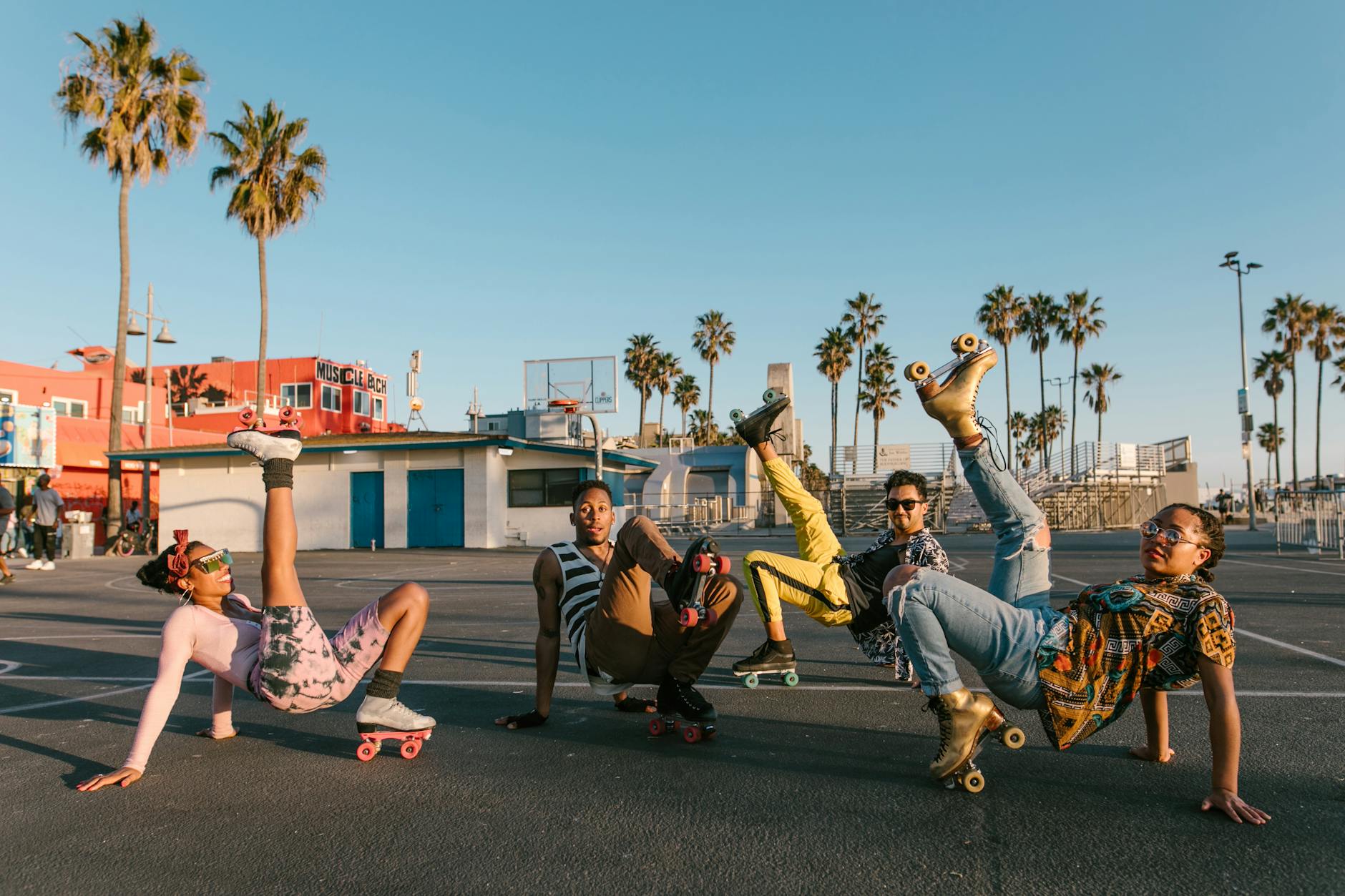
Quad skates – sometimes called roller skates – have four wheels arranged in a two-by-two configuration, much like the four corners of a rectangle. The wheels sit beneath a boot, and the wide base gives them a distinctive, stable feel. Quad skates are what most people picture when they think of roller discos or vintage skate rinks. They have been around since the 1800s and have never really gone out of fashion.
Inline skates – often called rollerblades, though Rollerblade is actually a brand name – have their wheels arranged in a single line, one behind the other. This narrower configuration makes them more similar in feel to ice skates. Inline skates surged in popularity during the 1990s and remain enormously popular today, particularly for outdoor skating, fitness, and aggressive street or skate park use.
Both are fantastic. Both take practice. And both will give you a serious amount of fun once you find your feet – quite literally.
How Each Type of Skate Actually Feels to Ride
This is probably the most important section for a complete beginner, because the physical sensation of each skate is genuinely quite different.
Quad skates feel more grounded and stable when you’re standing still. The wide wheelbase means you’re less likely to wobble immediately upon standing up for the first time. Many beginners find this reassuring. However, the trade-off is that quad skates can feel a little clunky when you try to move quickly or change direction sharply. They’re designed to be used with a more upright, hip-width stance, and that takes a little adjustment if you’ve never skated before.
Inline skates, by contrast, feel narrower and more dynamic from the very first moment. They encourage a forward lean and a more athletic posture. Some beginners find this slightly intimidating at first – the narrower base can feel less forgiving when you’re still working out where your weight should be. That said, inline skates tend to roll faster and more smoothly on outdoor surfaces, and many people find that they progress quickly once the fundamentals click into place.
Neither skate is objectively easier to learn than the other. It very much depends on your own body, your balance instincts, and what feels natural to you. Some people find quads a gentler introduction; others take to inline skates immediately and never look back.
Where Are You Planning to Skate?
Your local environment should play a significant role in your decision. The UK has a genuinely varied skating scene, and the terrain you’ll be skating on matters enormously.
If you’re in a city like London, Manchester, Birmingham, or Bristol, you’ll likely be dealing with a mix of smooth pavements, slightly bumpy tarmac, and the occasional cobbled nightmare. Inline skates generally handle outdoor urban terrain better, particularly if you opt for a model with larger wheels (80mm or above). The single-line wheel configuration gives better forward momentum and allows the skate to roll over minor cracks and imperfections more easily.
Quad skates, on the other hand, come into their own indoors. If you have access to a roller rink – and there are brilliant ones across the UK, from the iconic Roller Nation in London to rinks in Leeds, Newcastle, and Glasgow – quad skates are almost always the preferred choice for rink skating. The smooth wooden or polyurethane floors of a rink are an ideal surface for quads, and many rinks actually hire out quad skates as standard.
That said, outdoor quad skating is absolutely a thing, and a growing one at that. Skaters in cities like London have built a vibrant outdoor quad scene, particularly in areas like Hyde Park and along the South Bank. If outdoor quad skating appeals to you, just be aware that you’ll want to invest in harder, larger wheels than the soft indoor wheels that often come as standard.
The Communities and Cultures Around Each Style
Skating is as much about community as it is about the physical act itself, and both quad and inline skating have rich, welcoming communities in the UK.
The quad skating scene in Britain has experienced a genuine renaissance over the past few years, driven in part by social media and in part by the resurgence of roller discos and rhythm skating. Rhythm skating – a style that blends skating with dance moves, often to soul, funk, or R&B music – has become incredibly popular, and the UK has its own growing community of rhythm skaters. Quad skating also has strong ties to roller derby, a full-contact team sport with a passionate following across the country, with leagues in cities including London, Manchester, Edinburgh, and Cardiff.
Inline skating in the UK spans several distinct disciplines. Fitness skating and distance skating are enormously popular, with organised skates like the long-running Friday Night Skate in London attracting hundreds of participants on a good evening. Aggressive inline skating – which involves tricks, grinds, and skate park use – has its own dedicated community, particularly among younger skaters. There’s also a growing slalom and freestyle scene, and urban skating groups that treat entire city streets as their playground.
Before you buy, it’s worth looking up local groups in your area. Facebook groups, Reddit communities like r/rollerblading and r/Rollerskating, and Instagram are all good places to find your nearest skating community. Skating with others is one of the fastest ways to improve, and it’s a brilliant way to make friends.
What About Cost? A Realistic Budget Guide for UK Buyers
Budget matters, especially when you’re just starting out and aren’t yet sure how committed you’ll be. Here’s a realistic breakdown.
For quad skates, entry-level boots suitable for beginners start at around £40-£70 for basic recreational models. However, if you want something that will last and actually support your ankles properly, plan to spend at least £80-£150. Brands like Moxi, Impala, Rookie, and Sure-Grip are all popular in the UK market. Higher-end quad skates can run to several hundred pounds, but you absolutely don’t need to go there as a beginner.
Inline skates follow a similar pricing pattern. Beginner recreational inline skates from reputable brands like Rollerblade, K2, or Seba start at around £60-£100. Again, spending a little more – say £100-£200 – will get you a skate with better ankle support, more durable wheels, and a boot that fits your foot properly rather than just approximately. Cheap skates from supermarkets or very low-budget online retailers are best avoided; they often have poor ankle support and wheels that degrade quickly.
UK retailers worth checking out include Slick Willies in London, Skatehut (which operates both online and through stores), Inlineskate.co.uk, and Skates.co.uk. Buying from a specialist retailer – even online – means you’re more likely to get accurate sizing advice and after-sales support.
Safety Gear: Not Optional, Not Embarrassing
Whatever skate you choose, please wear protective gear. This is especially important as a beginner, when falls are almost inevitable. A fall on tarmac without wrist guards is not a fun experience. A fall with wrist guards is a minor inconvenience.
The essential protective kit for any beginner skater includes:
- Wrist guards – your most important piece of protection. When you fall, your instinct is to put your hands out, and wrist guards take the impact that would otherwise go through your wrists and hands.
- Knee pads – particularly useful in the early stages when you’re still working out how to fall safely.
- Elbow pads – less critical than wrists and knees, but worth having for more adventurous skating.
- Helmet – essential for skate park skating, aggressive inline, and highly recommended for any outdoor skating on roads or busy paths. A standard cycling helmet is acceptable, but a multi-sport or skate-specific helmet offers better side and rear coverage.
In the UK, there is no specific law requiring adult skaters to wear helmets on public paths or roads, but it is strongly encouraged by skating communities and instructors. For children under a certain age, many local councils and skating venues have their own rules, so it’s worth checking locally.
Learning to Skate: Your First Steps
Once you’ve chosen your skates and kitted yourself out with safety gear, here’s how to get started in a sensible, structured way.
- Find a smooth, flat, quiet surface. An empty car park on a Sunday morning is ideal. Avoid roads, steep hills, and busy pavements until you have real confidence.
- Put your skates on while sitting down. Lace or buckle them snugly – not painfully tight, but firm enough that your heel doesn’t lift inside the boot.
- Stand up carefully. Use a wall, a fence, or a willing friend for support. Get used to the feeling of the skates beneath you before you try to move.
- Practise the ready position. Feet shoulder-width apart, knees slightly bent, weight forward over the balls of your feet rather than your heels. This position is your foundation for everything else.
- Learn to march before you glide. Lift each foot in turn, just slightly, and put it down again. This gets your muscles used to the sensation of shifting your weight.
- Take your
time outdoors in a safe, open space. An empty car park or a quiet path is ideal. Avoid roads, steep hills, or busy areas until you are confident. - Learn to stop before you go fast. Practise your chosen stopping method repeatedly at low speed. Whether that is the heel brake on inline skates or the toe stop on quads, stopping reliably is more important than anything else in your early sessions.
Falling is part of the process, and it will happen. The key is to fall safely. Try to fall forwards rather than backwards, use your knee pads and wrist guards to absorb the impact, and avoid the instinct to throw your hands out flat on the ground. Most beginners pick up the basics within two or three sessions, and progress tends to accelerate quickly once the balance clicks into place.
Be patient with yourself and resist the urge to compare your progress to others. Everyone develops at a different pace, and the physical adjustments your body makes in the early stages take time to become natural. Short, regular sessions of twenty to thirty minutes will serve you far better than a single exhausting afternoon that leaves you sore and discouraged. Consistency is what builds confidence on skates.
Which Should You Choose?
Ultimately, the choice between inline and quad skates comes down to what you want from the experience. If you are drawn to speed, distance skating, or aggressive skating in skate parks, inline skates are likely the better fit. Their design suits forward momentum and the kind of performance skating that rewards technical progression. If you are more interested in rhythm skating, roller derby, social rink sessions, or simply prefer a wider, more planted stance, quad skates will feel more natural from the outset and tend to suit a broader range of recreational activity.
Neither type is objectively superior. Both will get you rolling, both reward regular practice, and both have thriving communities across the United Kingdom. The best skate is the one that matches your goals, fits your feet properly, and — most importantly — the one you will actually want to put on and use. Try a hire pair at a local rink if you can before committing to a purchase, and do not be surprised if, once you find your feet, you end up wanting a pair of each.